Zapytanie o materiały, konsultację techniczną lub dobór rozwiązania? Skontaktuj się z nami.


 GEOGABION
Materiały inżynieryjne dla budownictwa i infrastruktury
Ring Mesh, Hexagonal Mesh and Protection Systems
Our engineering solutions
Ring Mesh, Hexagonal Mesh and Protection Systems
Description
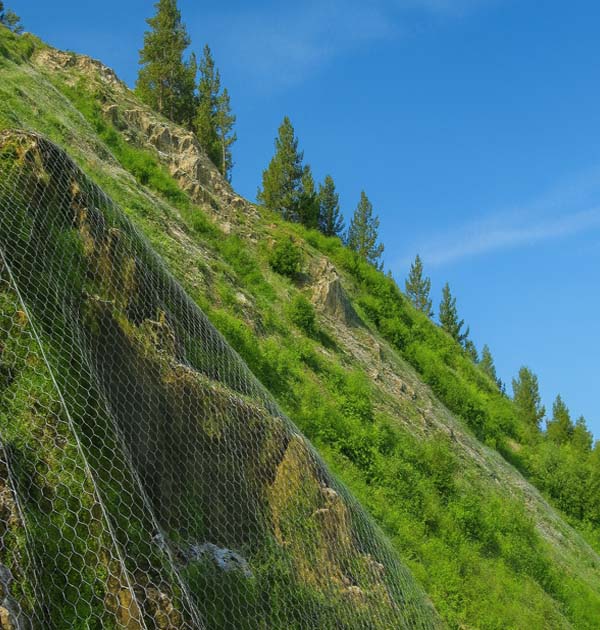
Ring mesh, hexagonal mesh and protection systems are materials used for slope stabilization, retention of unstable zones, and protective structures where static or dynamic load transfer is required. Depending on the system type, double-twisted mesh, ring mesh with cable-type weaving, and combined solutions with cable elements are used.
Applications
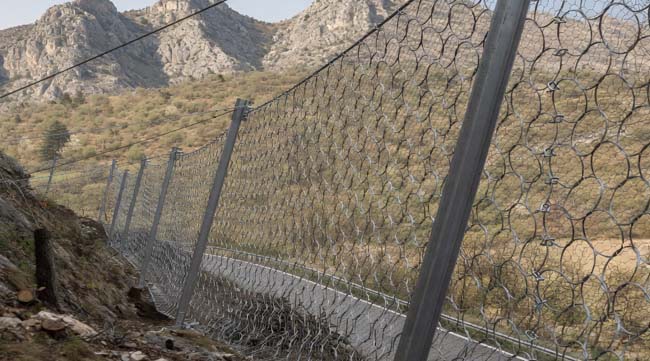
These systems are used for active slope protection, rockfall protection, stabilization of road embankments and cuttings, stabilization of rocky sections, and other specialized engineering protection systems. In some solutions, the mesh works together with anchors, ropes, plates, and other fastening components.
Key Selection Parameters
Important factors include mesh type, wire diameter, opening size or ring diameter, weave type, mechanical properties of the wire, presence of cable reinforcement, anchoring layout, and the overall design scheme of the structure.
Technical Characteristics
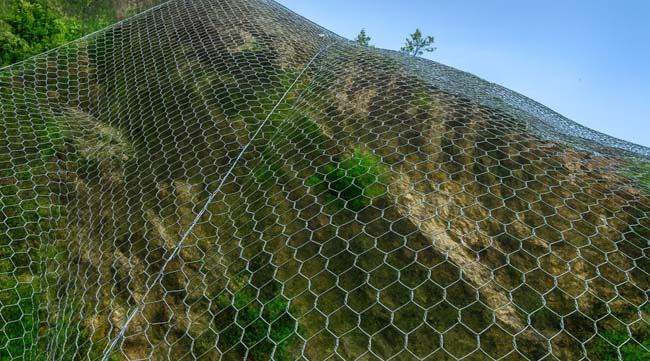
- shexagonal mesh: wire 2.2–3.0 mm, opening 60×80 mm or 80×100 mm
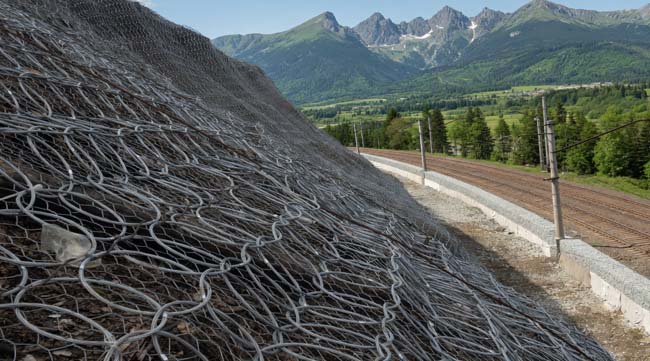
- ring mesh: wire 2.0–3.0 mm, ring 250–350 mm
- ring mesh weave type: 4 in 1, 6 in 1
- coating: zinc, Zn-Al, polymer
- additional elements: anchors, edge ropes, steel ropes, plates, clips, fixing components
- fasteners
Project-Specific Selection
Mesh type, wire parameters, weave type, presence of cable elements, anchoring scheme, edge ropes, and the set of fastening components are selected depending on slope geometry, loading, and protection system requirements.
Parameters Table — Hexagonal Mesh
Parameters Table — Ring Mesh
Typical Ring Mesh Variants
| Parameter | Typical values |
|---|---|
| Structure type | double-twisted |
| Wire diameter | 2,2–3,0 mm |
| Opening size | 60×80 mm, 80×100 mm |
| Coating | zinc, Zn-Al, polymer |
| Additional reinforcement | steel rope can be integrated into the mesh |
| System components | anchors, edge ropes, steel ropes, plates, clips, fixings |
| Wire mechanical properties | standard or enhanced Rm |
| Parameter | Typical values |
|---|---|
| Structure type | ring mesh with cable-type weaving |
| Wire diameter | 2,0–3,0 mm |
| Ring diameter | 250–350 mm |
| Ring cross-section diameter | about 6 mm |
| Weave type | 4 in 1, 6 in 1 |
| Minimum load capacity | 100–215 kN/m² and higher depending on configuration |
| Ring tensile resistance | from 60 kN |
| Mesh type | Wire | Ring | Weave | Minimum load capacity |
|---|---|---|---|---|
| 2,0 / 350 / 6 in 1 | 2,0 mm | 350 mm | 6 in 1 | 100 kN/m² |
| 2,0 / 250 / 6 in 1 | 2,0 mm | 250 mm | 6 in 1 | 125 kN/m² |
| 3,0 / 300 / 4 in 1 | 3,0 mm | 300 mm | 4 in 1 | 131 kN/m² |
| 3,0 / 300 / 6 in 1 | 3,0 mm | 300 mm | 6 in 1 | 215 kN/m² |
Project-Specific Selection
Mesh type, wire parameters, weave type, presence of cable elements, anchoring scheme, edge ropes, and the set of fastening components are selected depending on slope geometry, loading, and protection system requirements.
Parameters Table — Hexagonal Mesh
Parameters Table — Ring Mesh
Typical Ring Mesh Variants
| Parameter | Typical values |
|---|---|
| Structure type | double-twisted |
| Wire diameter | 2,2–3,0 mm |
| Opening size | 60×80 mm, 80×100 mm |
| Coating | zinc, Zn-Al, polymer |
| Additional reinforcement | steel rope can be integrated into the mesh |
| System components | anchors, edge ropes, steel ropes, plates, clips, fixings |
| Wire mechanical properties | standard or enhanced Rm |
| Parameter | Typical values |
|---|---|
| Structure type | ring mesh with cable-type weaving |
| Wire diameter | 2,0–3,0 mm |
| Ring diameter | 250–350 mm |
| Ring cross-section diameter | about 6 mm |
| Weave type | 4 in 1, 6 in 1 |
| Minimum load capacity | 100–215 kN/m² and higher depending on configuration |
| Ring tensile resistance | from 60 kN |
| Mesh type | Wire | Ring | Weave | Minimum load capacity |
|---|---|---|---|---|
| 2,0 / 350 / 6 in 1 | 2,0 mm | 350 mm | 6 in 1 | 100 kN/m² |
| 2,0 / 250 / 6 in 1 | 2,0 mm | 250 mm | 6 in 1 | 125 kN/m² |
| 3,0 / 300 / 4 in 1 | 3,0 mm | 300 mm | 4 in 1 | 131 kN/m² |
| 3,0 / 300 / 6 in 1 | 3,0 mm | 300 mm | 6 in 1 | 215 kN/m² |
Technical Notes
- Some systems may use mesh with enhanced wire mechanical properties.
- Anchoring and cable elements are selected according to slope geometry and loading.
- In specialized systems, compatibility of mesh, ropes, fasteners, and edge nodes is important.
Related Materials
- Gabions and Mattresses in Double-Twisted Mesh
- Welded Gabions, Meshes and Fencing
- Gabion Installation Components

Skontaktuj się z naszym zespołem, aby uzyskać ofertę, dokumentację techniczną lub wsparcie przy realizacji projektu.
Skontaktuj się z nami
Materiały
- Gabiony i materace z siatki o podwójnym skręcie
- Gabiony zgrzewane, siatki i ogrodzenia
- Siatki pierścieniowe i heksagonalne do systemów ochronnych
- Geokrata komórkowa
- Przepusty i zbiorniki retencyjne
- Pale śrubowe i wiaty fotowoltaiczne
- Kratka parkingowa
- Elementy montażowe do gabionów
- Geomata przeciwerozyjna
- Geowłóknina
- Obrzeża trawnikowe
Kontakt
- Blosson Sp.z o.o., ul. Inflancka, 29, 61-132 Poznan, Poland
- office@geogabion.com
- +48 786 330 441


© 2026 Wszelkie prawa zastrzeżone. Stworzone przez Studio 3S
Regulamin | Polityka prywatności